
Botox is a popular treatment for wrinkles, with results typically appearing within 3–7 days and lasting around 3–4 months. However, side effects can include bruising, headaches, and temporary eyelid or eyebrow drooping, with rare but serious complications also possible.
If you're considering Botox but have concerns about its effects or safety, this guide covers how it works, whether wrinkles come back after treatment, how long the results last, potential side effects, and whether non-invasive alternatives like red light therapy are worth considering.
How Does Botox Work for Wrinkles?
Botox works by temporarily relaxing the muscles responsible for these expression lines. Once the muscles contract less, the skin above them folds less frequently, making wrinkles appear smoother. It is particularly effective for dynamic wrinkles, such as forehead lines, frown lines between the eyebrows, and crow's feet around the eyes.
However, not all wrinkles are caused by muscle movement. Static wrinkles remain visible even when your face is relaxed. They can develop as skin loses collagen and elasticity with age and sun exposure, alongside years of repeated facial expressions. Botox may soften some of these lines, but it does not directly rebuild collagen or restore lost skin elasticity.
Botox can visibly reduce wrinkles within days, but its effects typically last only 3–4 months. It doesn't address collagen loss or sun damage, so as muscle movement gradually returns and skin aging continues, your wrinkles may reappear.
How Long Does Botox Last?
Botox results typically last around 3–4 months, although the duration varies by person, treatment area, dose, and individual response. Some people notice that their results last longer, while others see muscle movement return sooner.
The effect is not immediate. Many people begin noticing a difference within 3–7 days, with the full effect becoming clearer over the following days. The treated muscles gradually regain movement as the effect wears off, and wrinkles may become more visible again.
Several factors can influence how long results remain noticeable, including the muscles being treated, the injection technique, the amount administered, and individual differences in muscle activity.
Because the effect is temporary, maintaining the result generally involves repeat appointments with a qualified medical professional. Treatment frequency should be based on clinical advice rather than an automatic schedule.
If you prefer not to have repeated injections, it may be worth exploring other approaches to skin aging. However, alternatives should not be expected to reproduce Botox's muscle-relaxing effect.
Botox Side Effects: What to Know
Botox injections for wrinkles may cause side effects such as bruising, injection-site discomfort, headaches, or temporary eyelid or eyebrow drooping. Although rare, more serious complications, including difficulty swallowing or breathing, have also been reported. Choosing a qualified medical professional can help reduce treatment risks.
What Effects Botox Results Most?
The injector's technique and the dose can affect your results:
- Too much Botox: May cause a frozen look or overly restricted facial movement.
- Uneven injections: Can lead to uneven eyebrows or an asymmetrical smile.
- Incorrect placement: May cause temporary eyelid or eyebrow drooping.
Choosing an experienced, qualified injector helps reduce these risks and achieve more natural-looking results.
Botox vs. Red Light Therapy for Wrinkles
Botox and red light therapy work differently to address wrinkles. Botox temporarily relaxes the facial muscles responsible for expression lines, while red light therapy uses specific wavelengths of light to influence skin-cell activity and may help improve fine lines and skin texture over time.
Botox is generally more suitable for prominent expression lines, while red light therapy may be worth considering for gradual improvements in skin quality. However, red light therapy is not an equivalent replacement for Botox, and results vary by device and treatment protocol. More research is needed to establish its effectiveness and long-term benefits.
You can also combine Botox with LIFTHER laser light therapy to address different signs of aging. LIFTHER recommends waiting two weeks after Botox injections before using its laser mask as a precaution, while individual recovery may vary. Read the LIFTHER safety guide for details.
| Comparison | Botox | Red Light Therapy (RLT) |
| Treatment method | Invasive injections | Non-invasive |
| Wrinkle-reduction mechanism | Blocks nerve signals to targeted muscles, temporarily reducing muscle contractions | Uses specific wavelengths of light to influence cellular activity and may support collagen-related processes |
| Side effects | May cause bruising, headaches, or temporary eyelid or eyebrow drooping | Generally well tolerated; mild, temporary irritation may occur |
| When results appear | Usually within 3–7 days | Gradually over several weeks of consistent use |
| Main limitations | Effects typically last 3–4 months; repeated injections are needed to maintain results | Long-term effectiveness and maintenance requirements remain less certain |
Is Red Light Therapy a Good Option for Wrinkles?
In an independent SGS clinical study involving 32 women aged 34–45, the LIFTHER 4D Laser Mask(LIFTHER laser technology) showed a 24.56% reduction in measured crow's feet count after 28 consecutive days of use. These results provide product-specific evidence that LIFTHER laser technology may help improve the appearance of wrinkles with regular use. Read the LIFTHER 4D Laser Mask SGS Report.
Unlike Botox, red laser light therapy does not relax facial muscles to smooth expression lines. Its potential skin benefits develop gradually, so occasional use may not give you enough time to assess its effects.
Reduce skin aging and facial sagging
Collagen loss and changes in skin elasticity can contribute to fine lines and reduced firmness, while changes in facial contours can make sagging cheeks or a less defined jawline more noticeable. A treatment focused on skin quality alone may not address both concerns.
The LIFTHER 6D Laser & EMS Anti-Aging Therapy Mask combines LIFTHER laser light technology with EMS, bringing two different approaches into one device.
- Laser light therapy for skin aging: Uses multiple wavelengths to target visible concerns such as fine lines, uneven skin tone, and reduced skin firmness over time.
- EMS for facial contours: Stimulates targeted facial muscles and is designed to support a firmer-looking appearance and more defined facial contours.
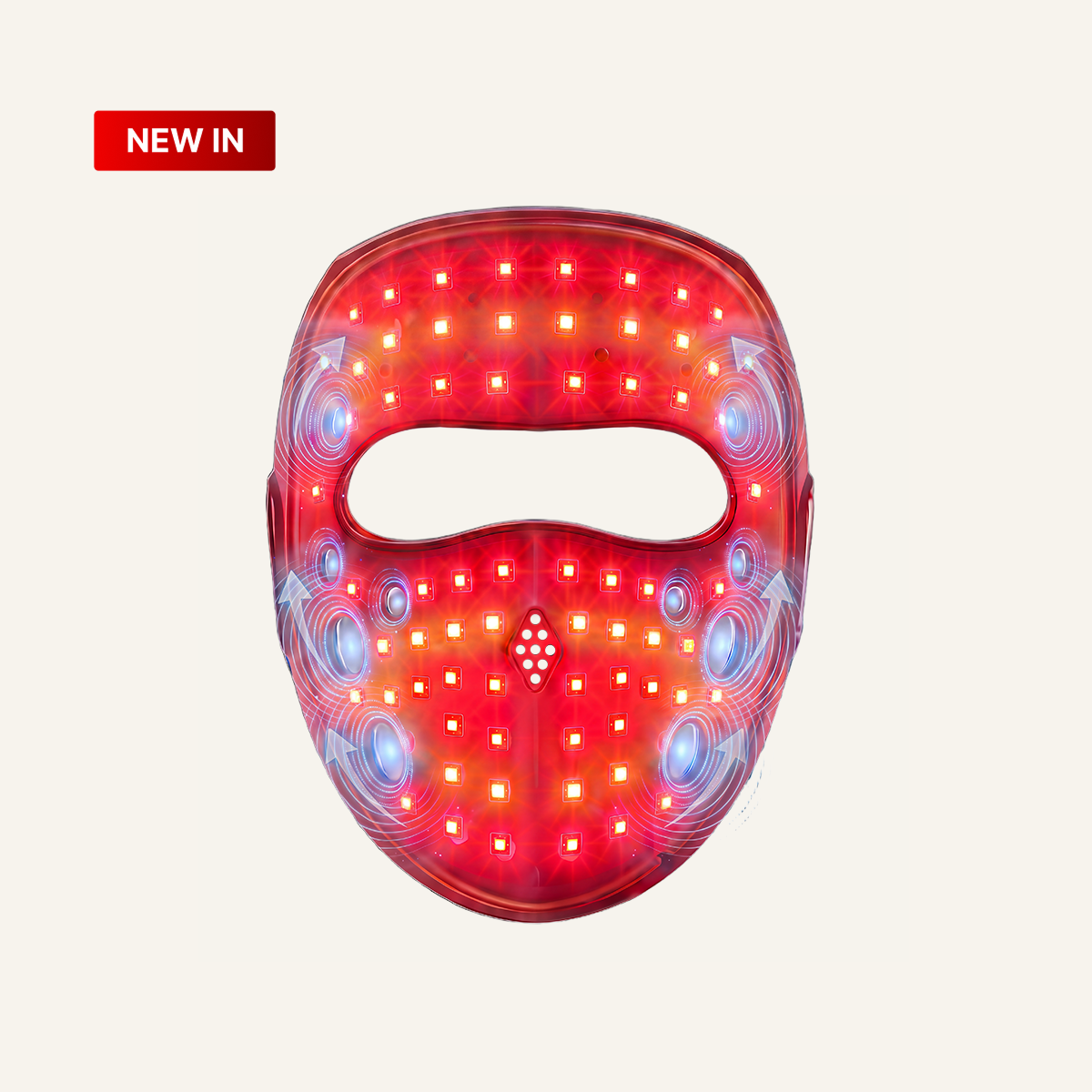
LIFTHER 6D Laser EMS Mask
Best seller
Laser & EMS anti-aging technology
Advanced 1064 nm Laser Technology
10-Electrode system for lifting
$869.00
Shop now - $160 OFFThe Bottom Line
Botox offers a temporary way to soften wrinkles caused by muscle movement. Red light therapy takes a different approach, with potential skin-quality benefits that develop more gradually and vary by device. Understanding that difference makes it easier to choose a treatment based on what your skin actually needs.